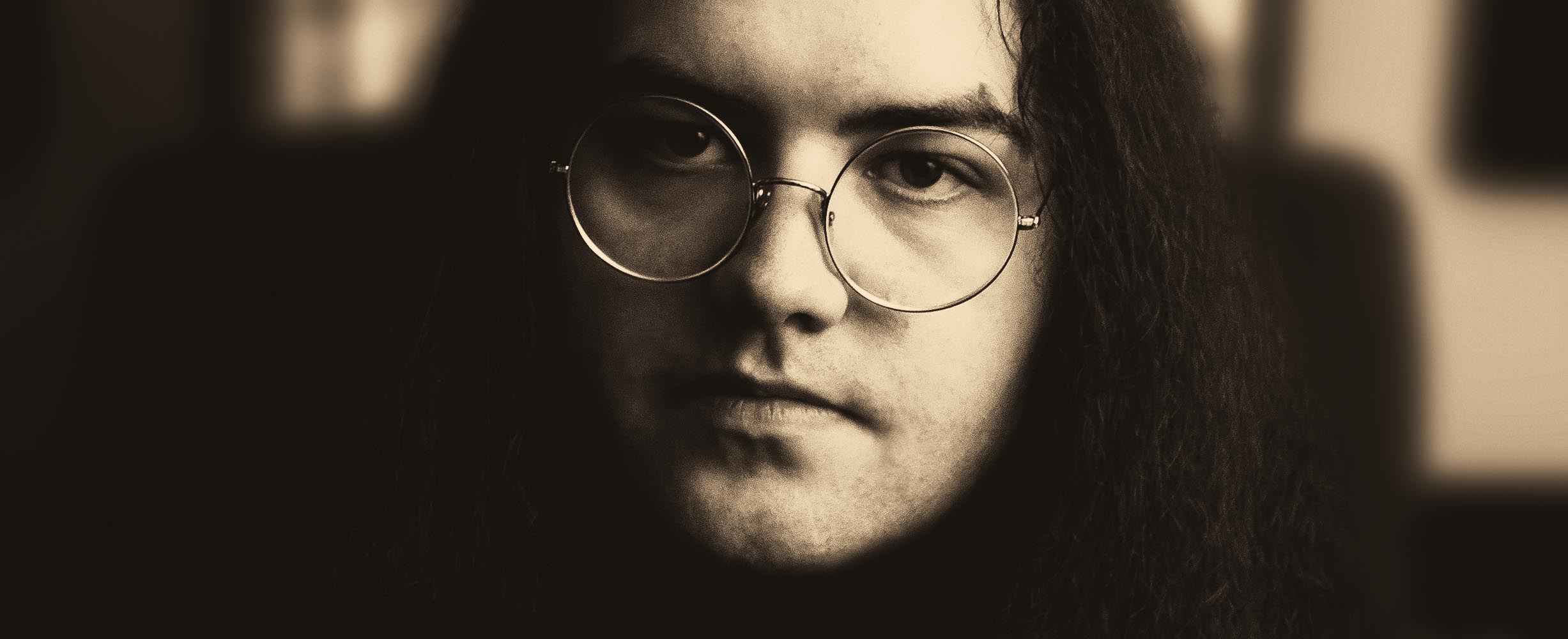
Music can transport the listener into other worlds.
It can let you experience emotions you’ve never felt before, make you remember things you never knew, and let you be a part of worlds that don’t even exist.
Since both of my parents are professional musicians, I was exposed to various styles of music at a very early age and was able to experiment with the instruments we had at home. From the very beginning, however, I wanted to explore music on my own, which my parents made possible by providing me with resources such as instruments, without pressuring me to learn music in a traditional way. This allowed me to develop my own understanding of music and my own musical language.
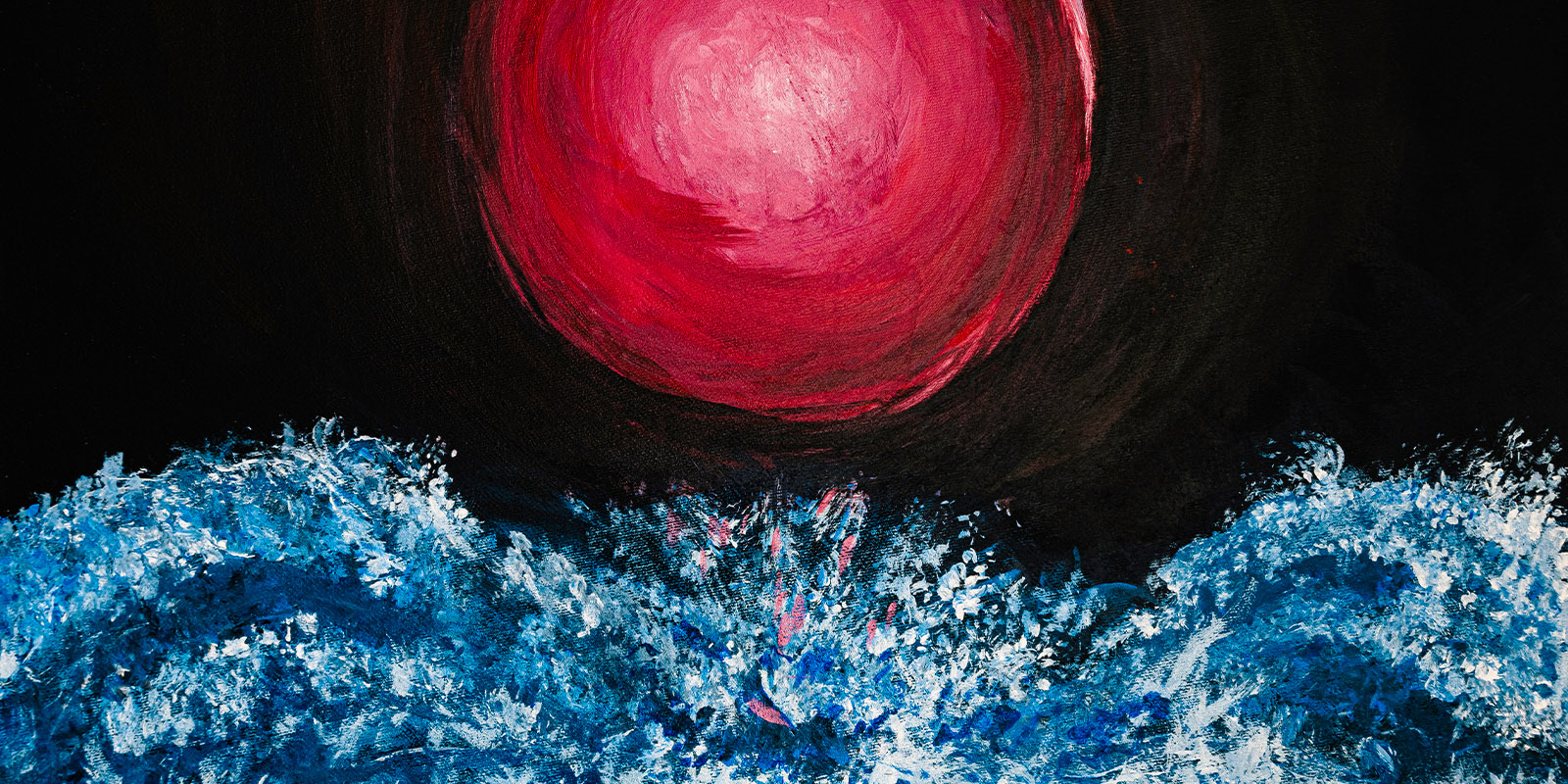 Blue Void – A painting I created for this piece based on my perception of it.
Because I perceive music as colors and images (a form of synesthesia), I developed a long-standing fascination with film, which led to me working at a local television studio. There, I regularly talked with a colleague about my projects, which had always been shaped by my own music. It was these conversations that finally gave me the impetus to devote my full attention to music and to become a composer rather than pursuing other careers in the film industry. Today I always describe that time as a period when I couldn’t see the forest for the trees.
What began as film music quickly evolved into concert music, primarily chamber music and orchestral works, but my musical language continues to evolve.
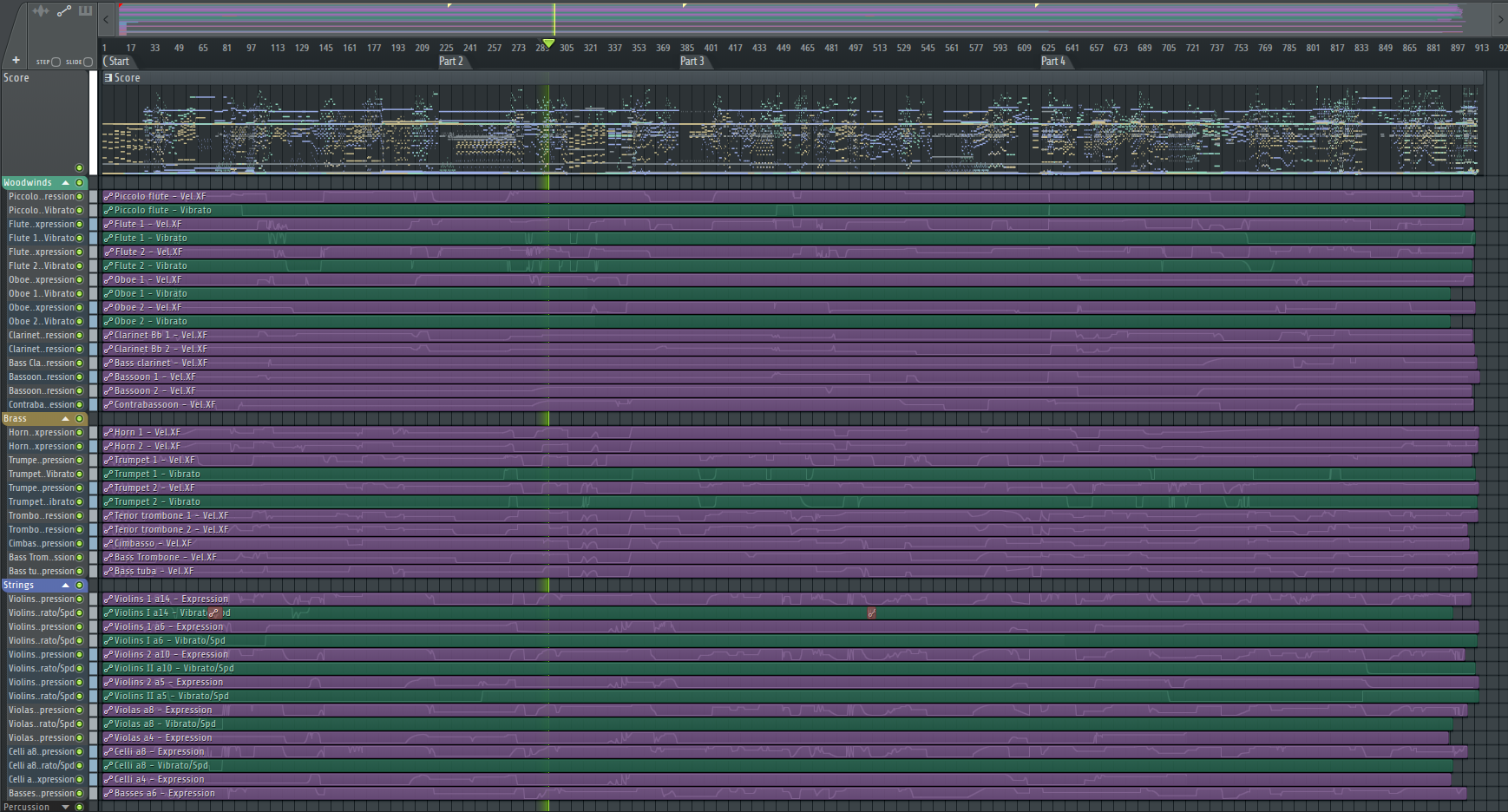 A screenshot of the MIDI project for my first Symphony – Sonokoda
My composition process begins by writing everything on my computer in the form of MIDI notation, which, much like regular sheet music, communicates information about pitch, time and expression, but is specifically accessible to computers and electronic instruments. Music written in this way can therefore be easily converted into sheet music with notation software. Programming MIDI notation is a very intuitive and speedy process for me – I don't have to think about time signatures or note values at all – so while composing, the music can just flow and I worry about everything else later.
Since I program my music using realistic sounding virtual instruments, I also use the composition process as means to express my music as I'm writing it. So while composing, I simoultaneously create a listenable version of the music well before it has ever been performed. This is also useful for rehearsals with musicians, because although they are working on a new piece, they have a reference for what I intend with the work.
My existing music can be heard at concerts that I cover on my blog, it can be listened to via audio, videos, streaming and CDs of recordings and my digital interpretations, and for performers or anyone who is interested, my sheet music is available for purchase.
You can find everything here on my website: